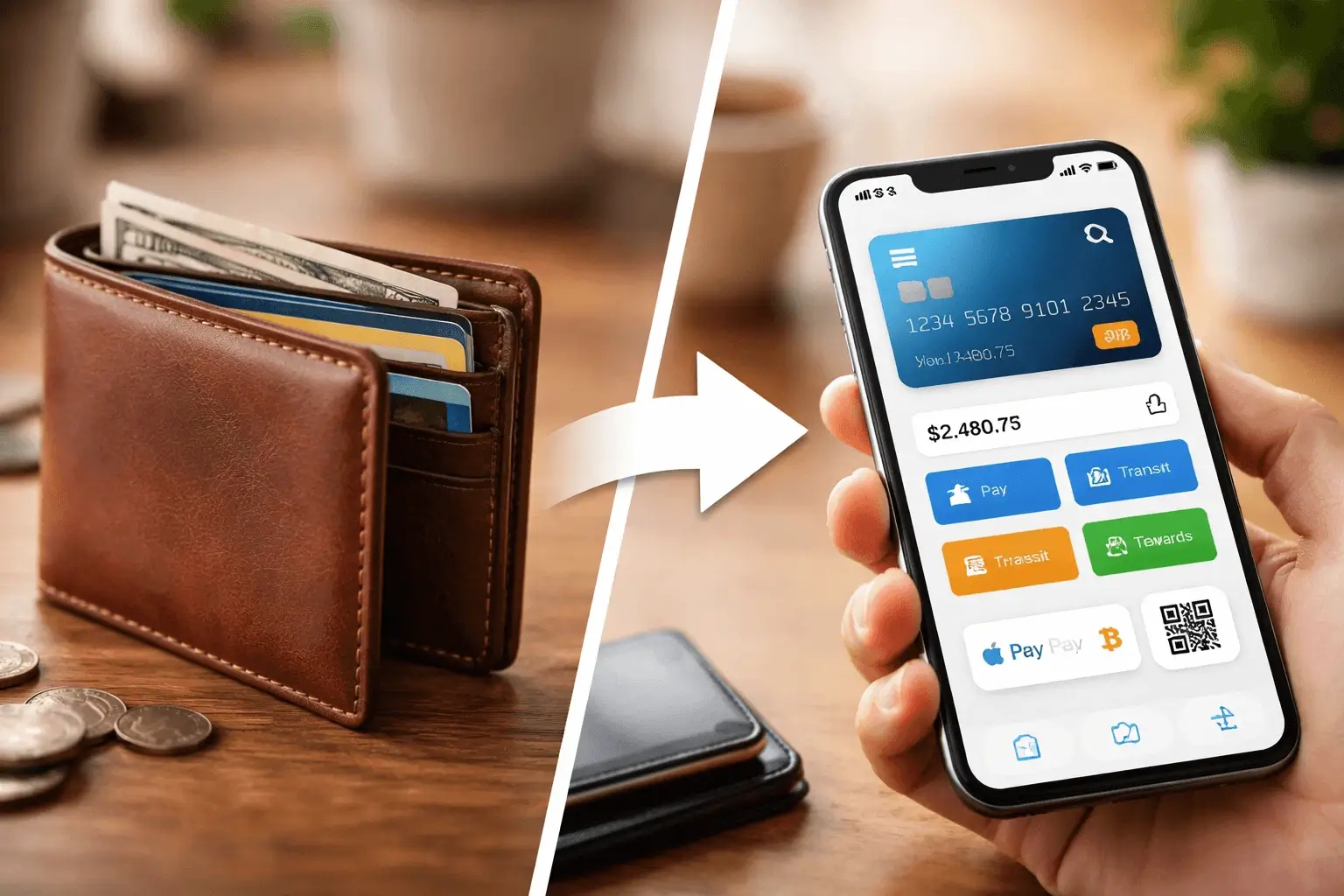
There's a conversation I used to have with myself regularly when I was running Shakes 2GO. A customer would come in, buy a milkshake, I'd stamp their card, and off they'd go. And I'd think: that person just spent money with me, they clearly like what we do, and I know absolutely nothing about them. Not their name. Not how often they visit. Not whether they'd been in three times this week or once this year.
That's the fundamental problem with running a small business without a proper loyalty system. You're serving customers every single day and building up zero understanding of who they actually are. Costa knows exactly how often you visit, what you order, and when you last came in. That information is worth a fortune. And for years, gathering it required a fortune to set up.
That's changed. Completely. And if you're still running your loyalty scheme on a paper stamp card, or worse, not running one at all, here's why that needs to change too.
The Loyalty Gap Between Big Chains and Independent Retailers
Walk into a Costa, a Greggs, or a Pret and you'll be invited to join their loyalty scheme within about thirty seconds. It's on their app. It tracks your purchases. It shows you your rewards. It knows when you're close to a free item. It keeps you coming back not just because you like the coffee, but because you're invested. You've got points, you've got stamps, you've got something to redeem.
Walk into most independent coffee shops, bakeries, or boutiques. You might get a paper stamp card if you ask. You might not. The card will live in your wallet until it gets lost, or soggy, or forgotten about entirely. Nobody will know you've stopped coming in. Nobody will have any record that you were ever there.
This gap is one of the most quietly damaging disadvantages in independent retail. Because loyalty isn't just about nice feelings. It's about economics.
The Numbers Behind Loyalty
It costs five times more to acquire a new customer than to retain an existing one. A customer who visits twice a week instead of once is, for most independent retailers, worth hundreds of pounds more per year. Loyalty schemes exist to make that second visit happen. And the third. And the fourth.
The good news, and this is the part I genuinely love telling independent retailers, is that the loyalty gap has closed. The technology that powers big chain loyalty programmes is now available to a small business for the price of a couple of drinks a month. No development team. No six-month rollout plan. No contract to sign.
What "Loyalty App" Actually Means for a Small Business
When most people hear "loyalty app" they picture something like the Starbucks app. A custom-built branded application that customers download, create an account on, and use to pay, collect points, and redeem rewards. That kind of app used to cost tens of thousands of pounds to build. It still can.
But that's not the only option. And for most independent retailers, it's not even the right option. Because the biggest enemy of any loyalty scheme is friction. The more steps between a customer deciding to join and actually being enrolled, the more of them you lose.
A standalone app has a lot of friction. Download it. Open it. Create an account. Verify your email. Set a password. Find the loyalty card section. That's five or six steps before a customer has even got their first stamp. A significant percentage of people give up somewhere in that process.
The smarter starting point for most independents is a digital wallet loyalty card. One that lives inside Apple Wallet or Google Wallet, already installed on virtually every smartphone in the UK. No download required. No account to create.
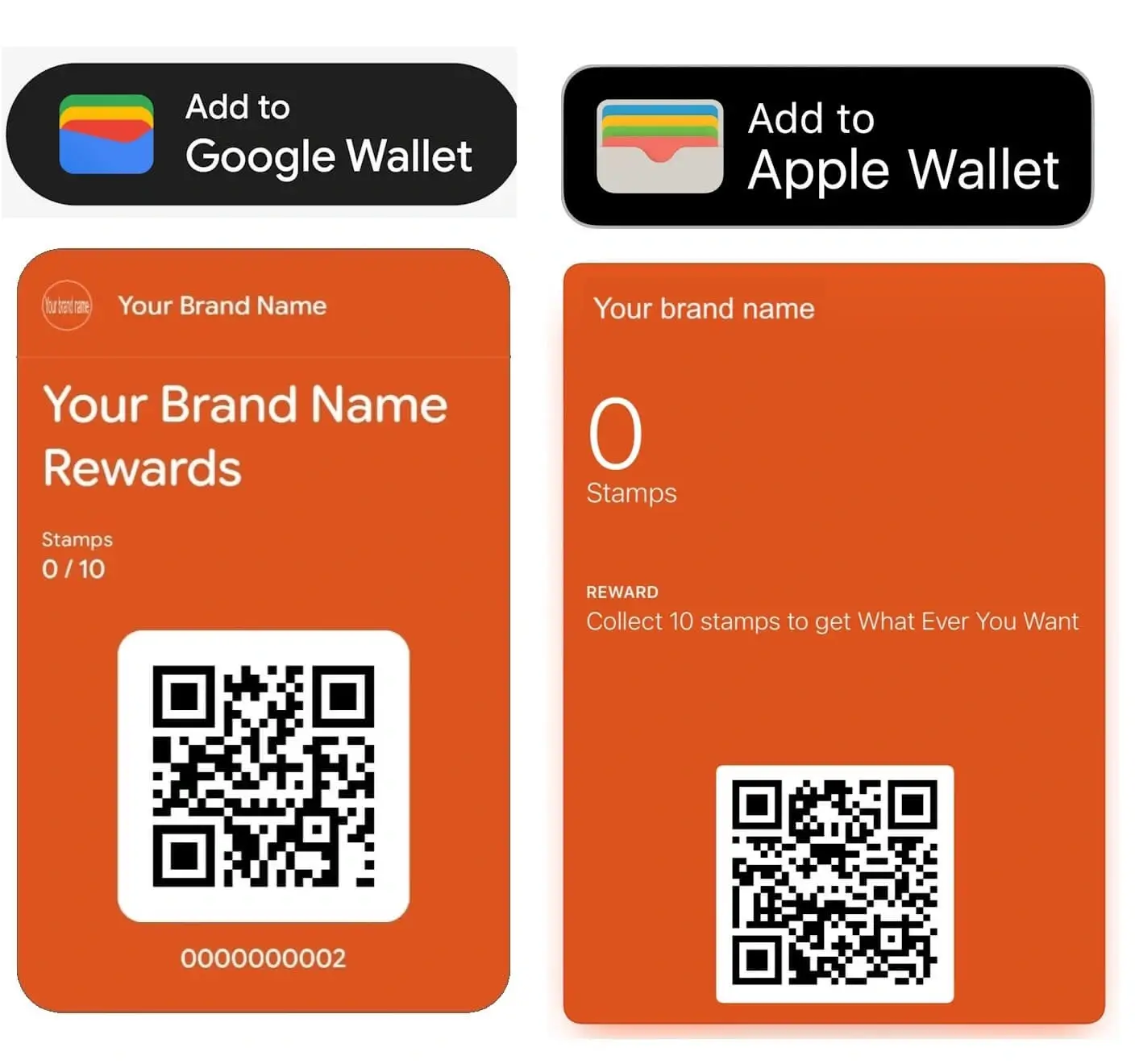
The customer scans a QR code on your counter, taps "Add to Apple Wallet" or "Add to Google Wallet," and they're enrolled. The whole thing takes under 30 seconds. Their loyalty card sits alongside their bank cards and boarding passes, visible every time they open their wallet, showing exactly how many stamps they've collected toward their next reward.
With PerQ you customise everything. How many stamps are needed for the reward. What that reward is. What colour the pass should be. Your logo on the pass, not ours. Your brand name, not ours. It's your loyalty scheme, built around your business.
Two Routes: Which One Is Right for Your Business?
There are two main ways an independent or regional retailer can run a proper digital loyalty scheme. They serve different needs and different scales.
Route 1: Digital Wallet Loyalty Card (PerQ)
The right option for most independent retailers. Single or small multi-site businesses that want a digital loyalty scheme up and running quickly, cheaply, and without any technical complexity.
With PerQ you get a fully branded digital loyalty card that lives in Apple Wallet and Google Wallet. You display a QR code in your shop. Customers scan it and add the card to their wallet. You use the free PerQ scanner app on your smartphone to add stamps. Every interaction is tracked. You get a dashboard showing visit frequency and reward redemption. It goes live the moment you join. Sixty seconds from signing up to being ready to enrol your first customer.
From £12 per month. No setup fee. No contract.
Route 2: Fully Branded White-Label Loyalty App (PerQ Enterprise)
The right option for regional retailers, small chains, and franchise groups who want their own branded app in the App Store and Google Play. Your name, your logo, your colours. The kind of thing that used to require a bespoke development budget of tens of thousands of pounds.
PerQ Enterprise is a white-label loyalty app platform built specifically for this. Fully branded app, push notifications to your customers, and the infrastructure to manage loyalty across multiple sites. It looks like something a major chain would have built. Effectively, it is. Without the major chain price tag.
Not Sure Which Route?
Start with PerQ. It's live in 60 seconds, costs £12 a month, and gives you everything most independent retailers need. When you're ready for your own branded app in the App Store, PerQ Enterprise is the natural next step.
What You Actually Get from a Digital Loyalty Scheme
You stop being invisible to your own customers
With paper, loyalty is anonymous. Someone buys nine coffees but you have no idea who they are, how often they normally come in, or whether they've stopped visiting. With a digital scheme, every stamp is logged. You can see your most frequent customers. You can see when visit patterns change. Your own customer base stops being a mystery.
Your loyalty card stays in your customer's daily view
A paper stamp card only gets seen when a physical wallet is opened. And increasingly, wallets aren't being opened at all. People are paying with their smartphones. A digital wallet loyalty card lives in the same place as Apple Pay or Google Pay. Every time they tap to pay anywhere, their wallet opens. There's your card, showing their stamp count. A passive daily reminder that paper simply cannot replicate.
Rewards happen automatically
When a customer hits their reward threshold, their card reflects that automatically. No manual counting. No "I think I've got enough stamps" conversations at the till. The system handles it, which means your staff can focus on serving rather than administration.
No more lost cards
Every lost paper stamp card is a broken relationship. A customer who has to start again from scratch and, in a percentage of cases, simply doesn't bother. A digital card lives in the cloud. If a customer gets a new smartphone, their stamps are still there. If they accidentally delete the card, it can be re-issued in seconds with their full history intact.
The Objection I Hear Most Often
"My customers aren't really tech-savvy. I'm not sure they'd use it."
There will always be a small number of customers who prefer paper. That's fine. You can run both in parallel.
But the assumption that digital loyalty is for tech-savvy customers underestimates how normal smartphone wallets have become. Your customers are already using Apple Pay and Google Pay. They've already added boarding passes and event tickets to their wallet. The behaviour is completely familiar to the vast majority of smartphone users, all ages, all demographics. Adding a loyalty card is the same gesture they've already made dozens of times.
In practice, most independent retailers who switch to a digital loyalty pass find that adoption among their regular customers is significantly higher than they expected. And the customers who do adopt are more engaged with the scheme than they ever were with paper.
How to Get Started This Week
If you're running a paper stamp card right now, here's the simplest possible path to going digital.
- Sign up for PerQ. It takes 60 seconds and you're ready immediately. No contract, no setup fee, free for the first 30 days, then from £12 a month.
- Print your QR code. PerQ generates it for you. Put it on a small stand at your till. That's your entire point-of-sale setup.
- Brief your staff. One sentence: "Would you like to add our digital loyalty card to your smartphone? It lives in your Apple or Google Wallet. No app download needed."
- Download the free scanner app to your smartphone. Then scan your customers' wallet passes the same way you would scan a barcode at checkout.
- Run both in parallel. Quietly stop issuing new paper cards while still stamping any existing ones. Within six weeks you'll be almost entirely digital.
No IT project. No extra hardware. No training days. Just a QR code, a scanner app on your smartphone, and a loyalty scheme that finally tells you something useful about your own customers.
The Real Competitive Advantage
Independent retailers can beat the big chains on warmth, personality, quality, and community. What they've historically lost on is loyalty infrastructure. That gap is now closed. The only question is whether you take advantage of it before your local competitor does.
Final Thought
When I built Retail Geek, this was the problem I was trying to solve. Not because it's technically complicated. But because I'd lived the frustration of serving hundreds of customers a week and knowing almost nothing about them. Watching people drift to a chain down the road because their loyalty scheme lived on a smartphone and mine lived on a piece of card.
You don't need a big budget to fix this. You need 60 seconds and £12 a month. The technology is there. The question is just whether you use it.
Start your free trial of PerQ — ready in 60 seconds, no contract →