When someone is looking for a café they've never been to before, the first thing they do is check Google. Not Instagram. Not TripAdvisor. Google. And what they see in those first few seconds — how many reviews you have, what score you've got, what people are actually saying — will often decide whether they walk through your door or keep scrolling.
Google reviews are the single most valuable piece of free marketing available to most independent retailers. More valuable than social media followers. More valuable than a leaflet drop. Because they're trusted third-party proof, attached to a map, visible at exactly the moment a new customer is making a decision.
Most independent retailers don't actively ask for them. They hope happy customers will leave one. Some will. Most won't. Not because they don't care, but because they're busy and it doesn't occur to them unless someone makes it easy.
Here's how to fix that.
Why Most Retailers Feel Awkward Asking
The discomfort usually comes from one of two places. It feels like begging. Or it feels pushy, like you're burdening someone who just wanted a coffee and is now being asked to write something on their phone.
Both feelings are worth setting aside. Most people who've had a genuinely good experience at a small independent business are happy to leave a review. They just don't think to do it. A brief friendly ask doesn't feel like begging. It feels like a human connection, the same way recommending your favourite restaurant to a friend does. You're not asking for charity. You're asking someone who liked what you do to say so.
💡 The Asymmetry of Reviews
Unhappy customers are far more motivated to leave reviews than happy ones. Without actively asking your satisfied customers, your review score naturally drifts toward the negative end of your actual customer experience. Asking isn't gaming the system. It's correcting for a natural imbalance.
1. Put a QR Code on Your Counter
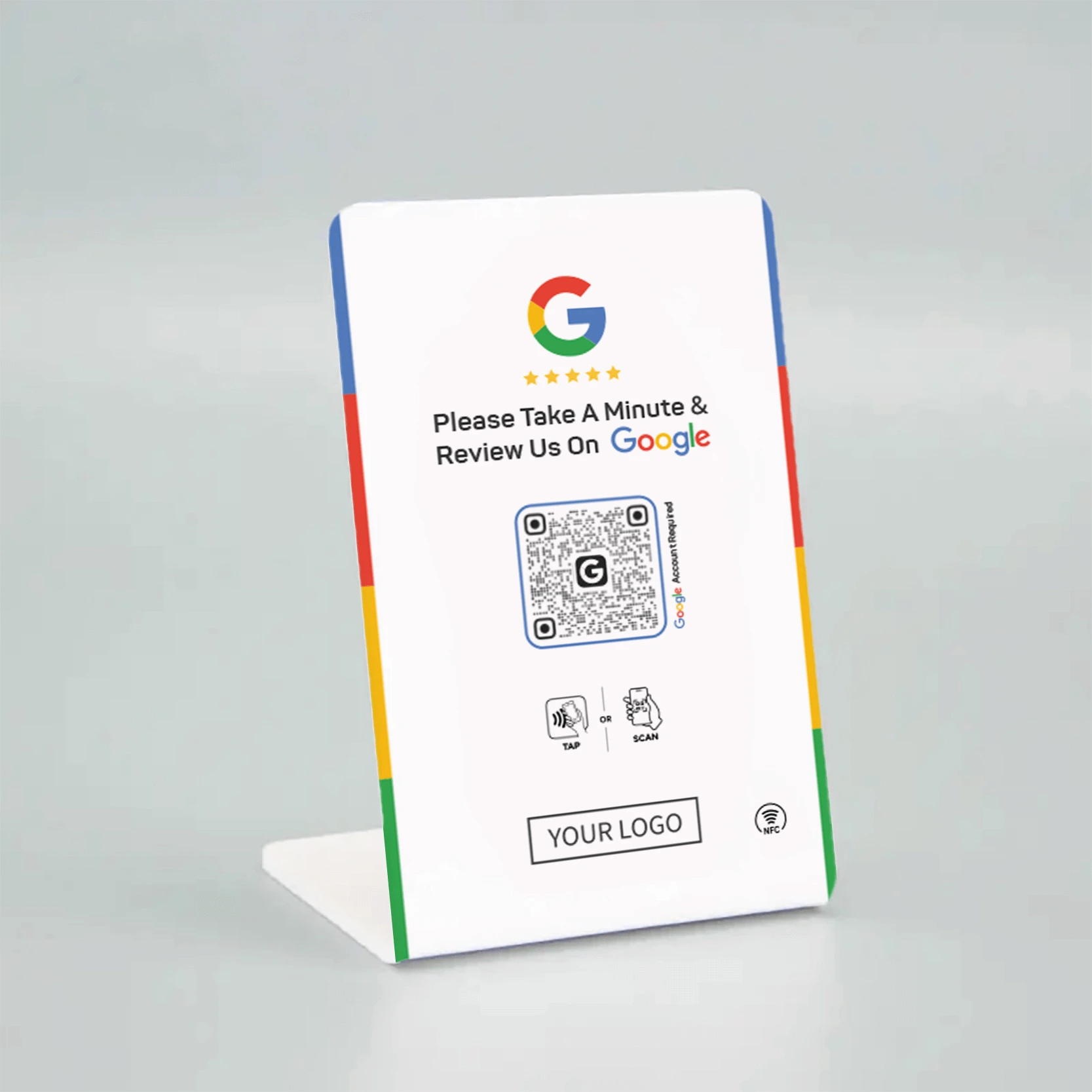
This is the single most effective thing you can do and it costs almost nothing. Get your Google review link from your Google Business Profile dashboard and turn it into a QR code using any free QR generator online. Print it. Put it in a small stand on your counter and on your tables with a simple line like "Enjoyed your visit? A Google review means the world to a small business like ours."
No asking required. Customers who are in the mood to leave a review can do so in under a minute without being prompted directly. The ones who aren't won't feel pressured because nobody said anything.
Make sure the QR code links directly to the review window, not just your Google listing. Every extra tap between the impulse and the action costs you reviews. Go to your Google Business Profile, find the option to share your review link, and use that direct URL in your QR code.
2. Ask Out Loud. At the Right Moment.
The right moment is immediately after a customer has expressed satisfaction. They've said "that was lovely." They've told you it's their favourite coffee in town. They've brought a friend in to show the place off. That's your moment.
"That's so kind — if you ever get a chance to leave us a Google review, it genuinely makes a huge difference to a small business like ours." Said with a smile, briefly, without pressure. Then move on. Don't hover. Don't follow up. Plant the seed and let them decide.
The worst moment to ask is when the customer is clearly in a rush, when something has gone slightly wrong, or when they haven't really engaged and you're asking cold. Timing it to a genuine positive moment makes the ask feel natural rather than transactional.
Brief your staff on this. It doesn't need to be a big training session. Just let them know that when a customer says something positive, it's fine to mention Google reviews. Most staff feel awkward about asking because nobody has explicitly told them it's okay. Once they know it is, and they have the right words, it becomes second nature.
3. Respond to Every Review You Already Have
This one surprises people. How does responding to existing reviews get you more reviews?
Two reasons. Potential customers reading your reviews don't just read the reviews. They notice whether you respond to them. A business that replies personally, thanks people for their kind words, or addresses a concern thoughtfully signals that it's run by real people who care. That builds trust before someone has even visited.
And when your regulars see that you respond, they're more likely to leave a review themselves. It feels more like a conversation than a broadcast. They know their words will be acknowledged.
Responding doesn't need to be lengthy. "Thanks so much Sarah — we really appreciate you taking the time, and we'll pass on your kind words to the team. See you soon!" Warm, personal, brief. Don't use templates. People can tell.
4. Handle Negative Reviews Correctly
You will get a negative review at some point. Probably more than one. How you handle it matters more than the review itself, because hundreds of future customers will read your response and form a view of you based on it.
Never get defensive. Never argue. Even if the review is unfair, factually wrong, or clearly from someone having a bad day that had nothing to do with your business, the response you want to write is not the response you should post.
The formula that works: acknowledge, empathise, offer to make it right. "We're really sorry to hear this wasn't up to the standard we aim for. Please do reach out to us directly at [email] so we can put things right." Short. Calm. Professional. Leaves the reader thinking well of you even if the original reviewer was unpleasant.
💡 The Counter-Intuitive Truth About Bad Reviews
A business with 200 reviews and a 4.6 rating looks more trustworthy than one with 12 reviews and a 5.0. Perfect scores with very few reviews can look curated or fake. A high volume of mostly positive reviews, with the occasional negative one handled graciously, is actually the most credible profile you can have.
5. Make It a Habit, Not a Campaign
The businesses with the strongest Google profiles didn't do a big one-off push. They made asking a consistent low-key part of how they operate every day. A QR code that's always on the counter. Staff who know it's okay to mention it after a positive interaction. An owner who responds to every review within 24 hours.
That consistency compounds over time. Ten reviews a month is 120 a year. After two years you have a profile that stops people in their tracks when they're deciding where to go.
The café down the road with 400 reviews and a 4.7 rating didn't get there by accident. Someone made it a habit.
The Bottom Line
Your happy customers are already out there. They enjoyed their visit. They'd recommend you to a friend if someone asked. All they need is a tiny nudge and a frictionless way to say so publicly.
A QR code on your counter. A genuine ask at the right moment. The discipline to respond to every review you receive. That's the whole system. It costs almost nothing, takes almost no time, and builds one of the most durable competitive advantages an independent retailer can have.